
Meet the gROWERS: Mount Prospect Produce
If you’ve popped into our markets lately, you’ll be familiar with the potatoes of Mount Prospect Produce. Beyond the crowd-favourite Sebagos and Dutch Creams, you’ll know their Purple Sapphires and Red Merlots. Perhaps you’ve even enjoyed the novelty of purple-coloured gnocchi.
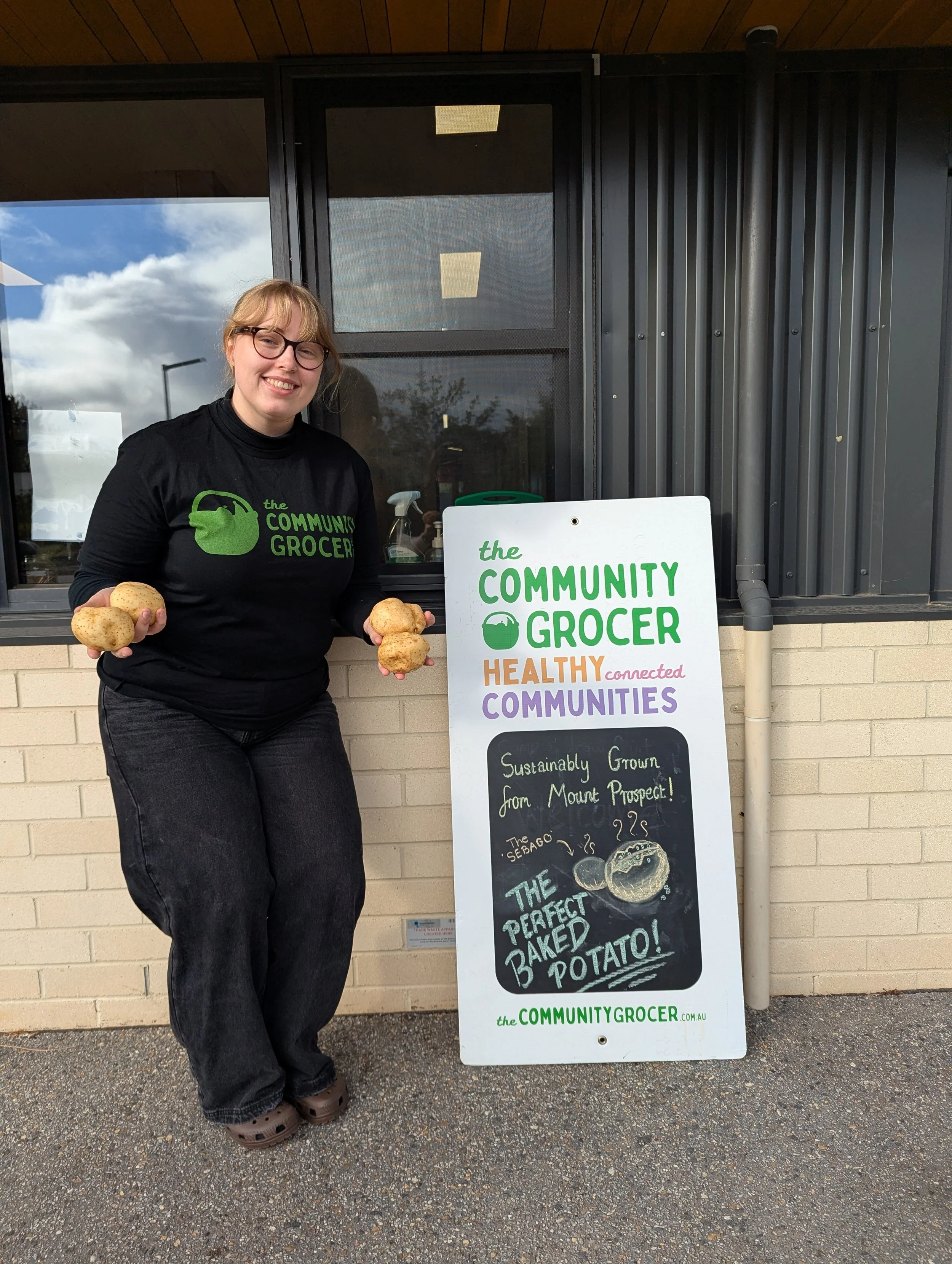
Our team at The Community Grocer Melton dubbed the Mount Prospect sebago the perfect baked potato
Mount Prospect Produce is one of The Community Grocer’s partner growers who use regenerative growing practices. They limit their use of pesticides and herbicides, and prefer compost and cover crops over synthetic, fossil fuel-dependent fertilisers. They also use Integrated Pest Management practices that focus on soil health and natural pest control.
Along with our other regeneratiely grown produce, our markets proudly sell Mount Prospect’s potatoes at low-cost, so that those living on a low-income can access quality, fresh fruit and vegetables that are otherwise prohibitively expensive.
Mount Prospect Produce is run by Rod and Gabrielle Fraser, a fifth generation potato farming family who adopted biological growing practices after decades of conventional farming and supplying supermarkets.
Here we speak to Rod about why they made the switch, how they did it, and (the heavy hitting question) what his favourite potato is.
You grow varieties that people know and love, like the Sebago, but also ones people may not be familiar with, like the Purple Sapphire and Pink Viking. Why is offering a variety important to you?
We wanted to add a bit of color to people's dinner plates, and add interest to our other basic varieties that everyone knows. When we started [Mt Prospect], we wanted to go back to traditional varieties that taste really good, plus get more people eating more potatoes.
We did some farmer's markets about 12, 15 years ago to get people's thoughts on what they were after. Then we narrowed it down to five or six varieties that we continue to grow.
Have you found people are surprised or excited by the different types?
Yeah, they were. And always with the purple sapphire, they go, “Oh God, that looks really strange.” But when they cut it open, they go, “Oh, that's amazing, the purple color all through it!” It just adds more interest.
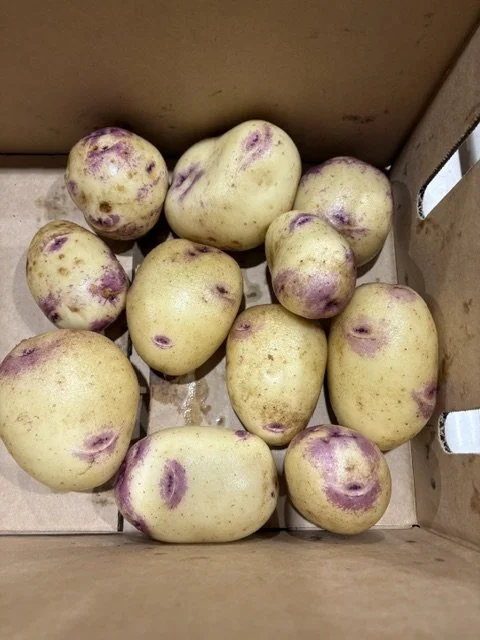
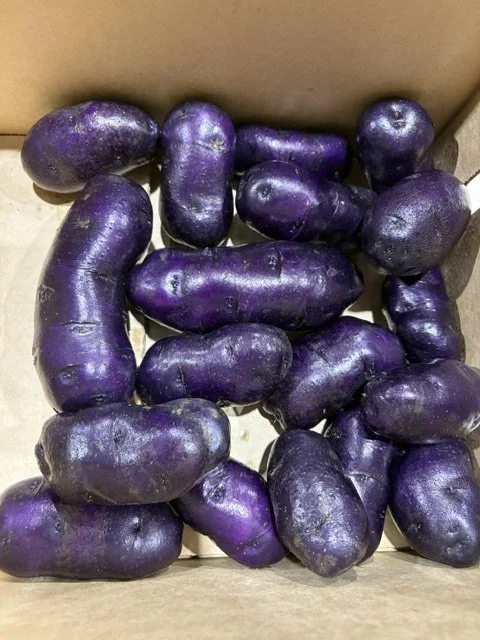
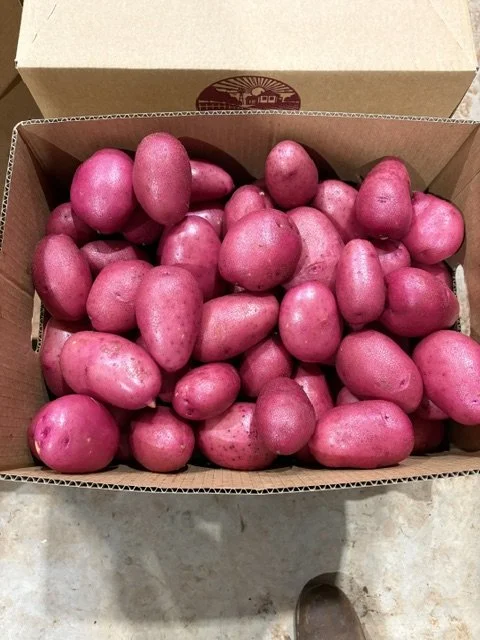
(L-R) Kestrels, Purple Sapphires, Pink Vikings from Mount Prospect Produce
The Community Grocer proudly works with you because of your sustainable growing practices. Can you tell us more about this?
We're lucky to have this really good soil where we are [near Ballarat]. So to look after it, we have to naturally build up the soil, use natural fertilizer, minimal chemicals or next to no chemical at all. We've done a lot of homework, and you get the benefits at the end.
We use things like compost, natural fertilizer, and mechanical weed control rather than spraying. And you’ve got to get your rotations right with the potatoes: Say, you only plant in that paddock every five years, build the soil up again, and in the end you’ve got really good soil to get healthy food. If all follows through from the soil.
We do this rather than organic–It's great, but it's so restricted with regulation. You can't use this, you can't use that. It's a lot of control.
So really, we call it “biological.” That's it in a nutshell.
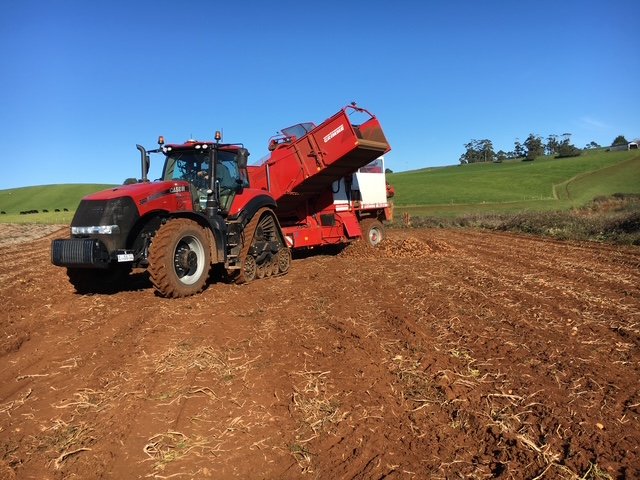
Photo courtesy of Mount Prospect Produce
You’re a fifth generation potato farmer. How did you go about changing tried and tested ways of doing things?
I started doing small trials with different natural fertilizers maybe 20 years ago. Back then it was harder to find than it is now.
It took a few years to build up the confidence to know what to do with natural fertilisers and natural ways of doing things, compared to, you know, run of the mill fertilizers that everybody uses.
It takes time, several years. But we just did a little bit at a time, and then more and more as we got good results. It's all done that way now.
“There’s so much pressure to make the product look perfect. But what do growers have to do to get it to that point? Maybe they look good, but they don’t taste or maybe they’re not as healthy.
When you’ve got healthy, nutritious food, you’ve got healthy, nutritious humans. ”
You’ve supplied supermarkets and big processors, and moved over to farmer's markets, restaurants, and local retailers like us. What made you decide to go in that direction?
It’s a good question. 10, 15 years ago, I was still with the family farm, and we needed a big buyer, like a supermarket or processor, to keep the big family farm running.
We dealt with supermarkets for a long time, but they got quite difficult to deal with. You'd grow certain lines of potatoes for them for years, and then all of a sudden they'd say, “No, we need to reduce your price to sell these potatoes.” So they'd cut it in half and say take it or leave it. That happened a few times.
Later I decided I wanted to focus on the purples, the pinks, the really good restaurant varieties. There was an opportunity there to make that bigger, and we got right into that.
So I stepped out on my own to do that with my wife and kids. And we were getting better money, you knew what you were going to get paid, and you don't have to grow as much as long as you're caring for the quality.
It's still difficult, and COVID killed off quite a few customers, but you find more as you go. We scaled back, and this is what we enjoy doing.
Photo courtesy of Mount Prospect Produce
Has it been worth the effort?
Yeah, definitely. I believe in healthy food because in this day and age, there's so much pressure to make the product look so perfect. Supermarkets just want it to look good. But what do growers have to do to get it to that point? Maybe they look good, but they don't taste or maybe they're not as healthy.
There's so many sicknesses in the world these days, and I believe it's to do with some of the chemicals in the food. That's the reason why I pushed [biological growing] further. At the end of the day, to me, it's got to be healthy as well.
When you've got healthy, nutritious food, you've got healthy, nutritious humans.
Finally, what's your favorite potato and how do you like to prepare it?
I still keep going back to basics. So for me, it’s the sebago. You can do anything with it and it always tastes really good. You can mash it up, you can roast it, make chips out of it if you need to. Roasting it is my favorite.
Boil ‘em, mash ‘em, stick ‘em in a stew
Mount Prospect’s potatoes are delicious however you prepare them. Try them for yourself by visiting any of our weekly pop-up markets.
Keen to work with The Community Grocer?
Are you a local grower prioritising sustainable and community-focused practices? If you’d like to explore selling your produce at our markets, please send us an email at produce@thecommunitygrocer.com.au.